When it comes to cold water storage, bigger doesn’t always mean better.
For many years, oversized tanks were commonly specified as a precautionary measure, allowing for future expansion or “just in case” storage capacity. However, modern building usage, changing occupancy patterns, and increasing focus on water hygiene mean that incorrect tank sizing can now create significant operational, compliance, and health risks.
Today, proper tank sizing is more important than ever.
The Role of a Cold Water Storage Tank
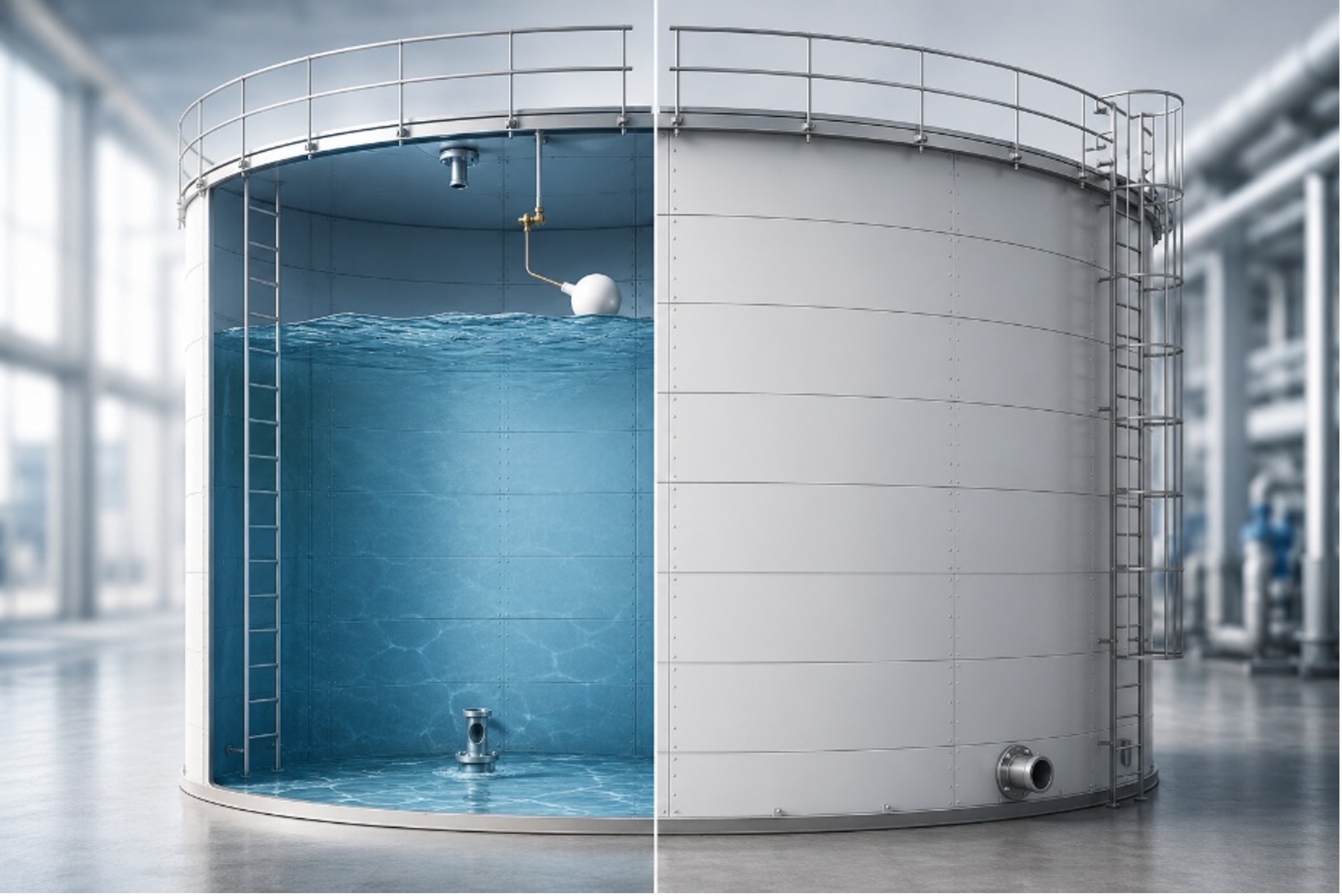
Cold water storage cisterns are designed to provide a reliable supply of water to a building while maintaining water quality and supporting system demand.
To perform effectively, tanks must be correctly sized for:
- The building’s occupancy levels
- Water usage patterns
- Peak demand periods
- Operational requirements
- Future but realistic capacity needs
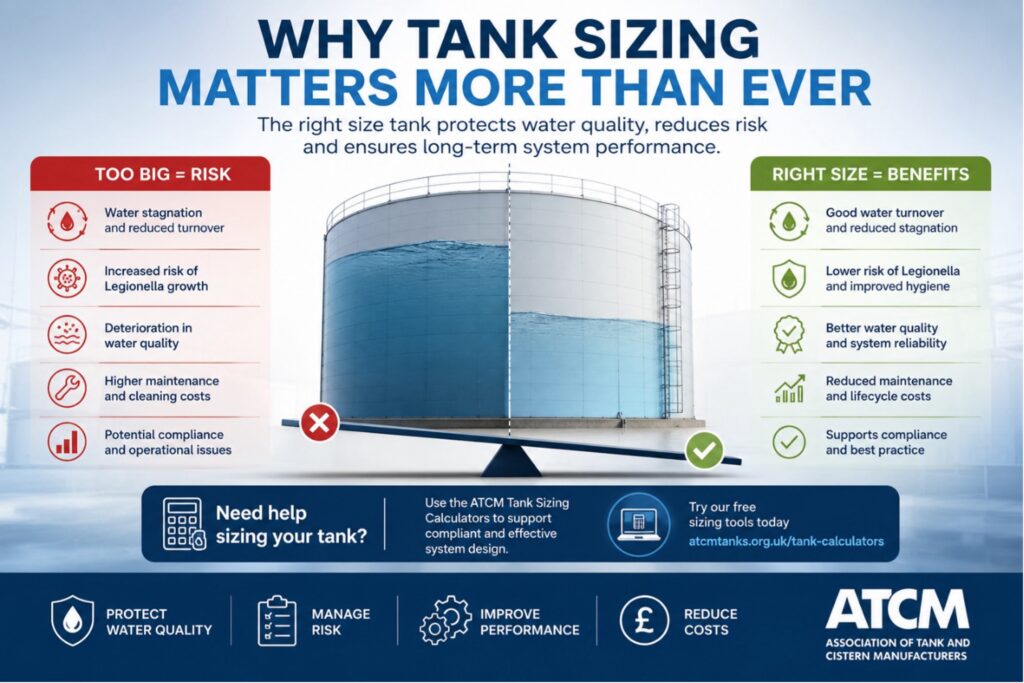
If a tank is too small, the system may struggle to meet demand. But if a tank is too large, water may sit unused for extended periods, creating a different set of problems altogether.
Why Oversized Tanks Can Become a Risk
One of the biggest concerns with oversized tanks is water stagnation.
Where stored water is not turned over regularly, temperatures can rise and conditions can develop that encourage bacterial growth, including Legionella.
HSE guidance within HSG274 Part 2 advises that stored cold water should ideally turn over within 24 hours. Oversized tanks often make this difficult to achieve, particularly in modern buildings where occupancy and water usage can fluctuate significantly.
This issue has become increasingly common in:
- Commercial buildings with hybrid working patterns
- Schools and universities during holiday periods
- Hotels and leisure facilities with seasonal occupancy
- Buildings designed with excessive future capacity allowances
Water that remains static for long periods can lead to:
- Deterioration in water quality
- Increased Legionella risk
- Sediment build-up
- Higher maintenance requirements
- Increased cleaning and disinfection frequency
Post-COVID Building Usage Has Changed Everything
The way buildings are used has changed dramatically in recent years.Hybrid working, reduced occupancy, and changing operational demands mean many systems are no longer operating as originally designed. Tanks sized for full-capacity usage may now experience significantly reduced turnover.As a result, systems that were once considered appropriately sized may now present water hygiene challenges.This makes reviewing existing tank sizing more important than ever, particularly in older buildings or facilities with changing occupancy patterns.
Undersized Tanks Create Problems Too
While oversized tanks receive much of the attention, undersized systems can also create operational issues.Insufficient storage capacity may result in:
- Poor pressure performance
- Inability to meet peak demand
- Interruption to supply during high usage periods
- Increased strain on booster systems and pumps
Correct sizing is therefore about achieving the right balance between operational resilience and water hygiene.
Compliance, Sustainability, and Lifecycle Performance
Correct tank sizing also supports broader compliance and sustainability goals.
Appropriately sized systems can help:
– Improve water turnover
– Reduce stagnation risk
– Lower maintenance costs
– Reduce energy usage associated with pumps and treatment systems
– Improve long-term system performance
– Support compliance with water hygiene guidance and risk assessments
As sustainability becomes a greater focus across the built environment, efficient system design is becoming increasingly important.
Guaranteed Prevention and Solution
One modern solution helping to address water stagnation and improve tank turnover is the use of intelligent control systems such as the Keraflo Tanktronic. Designed to actively manage stored water volumes, the Tanktronic helps ensure more regular water turnover by monitoring usage and controlling refill cycles more efficiently than traditional float-operated arrangements.
By reducing the amount of water stored unnecessarily for long periods, these systems can help minimise stagnation risks, improve water hygiene management, and support compliance with Legionella control guidance. As building occupancy and usage patterns continue to fluctuate, technologies that promote smarter water management are becoming increasingly valuable within modern cold water storage design.
You can find out more about the Tanktronic HERE
A Whole-System Approach Is Essential
Tank sizing should never be considered in isolation.
Effective sizing calculations should take into account:
- Building type and occupancy
- Actual usage patterns
- Future operational changes
- Legionella risk management
- System configuration
- Break tank arrangements
- Peak flow requirements
- Maintenance access and operational practicality
Working with experienced and competent specialists’ helps ensure systems are designed appropriately from the outset.
ATCM Tank Sizing Tools
To support specifiers, contractors, and building professionals, the ATCM provides practical online tank sizing calculators to assist with estimating storage requirements and system planning. > ATCM Tank Calculators
These tools can help provide an initial guide when assessing tank sizing requirements for a range of applications. All ATCM approved members offer accurate support with tank sizing advice. Please get in touch with any queries.
The Importance of Getting It Right
Tank sizing is no longer simply about ensuring there is “enough water”. It directly impacts:
- Water quality
- Compliance
- System efficiency
- Operational costs
- Long-term asset performance
As building usage continues to evolve and water hygiene standards remain under increasing scrutiny, ensuring cold water storage systems are correctly sized has never been more important.
Working with experienced manufacturers and suppliers, such as members of the Association of Tank and Cistern Manufacturers (ATCM), helps ensure systems are designed with both compliance and long-term performance in mind.
Reach out if you would like more information or advice.