When specifying, installing or maintaining a cold-water storage cistern, it is easy to concentrate on capacity, dimensions, materials and access. But some of the most important details are the arrangements that control how water enters and leaves the tank.
Air gaps, overflows and weirs each have a specific purpose. Correctly designed and installed, they help protect the wholesome water supply from contamination, manage excess water safely and maintain the integrity of the installation. Incorrectly sized, obstructed, altered or poorly maintained, they can compromise the protection they are intended to provide. So, what is the difference between these arrangements, and what should those responsible for tank installations be looking out for?
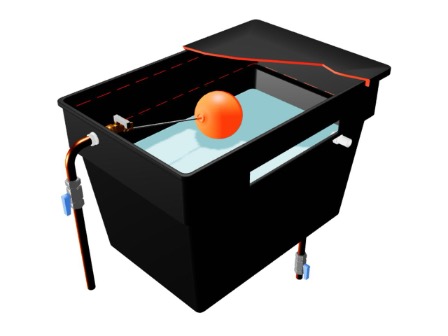
A close-up of a tank inlet arrangement showing the air gap. Ideally, use a real installation photograph so the technical subject is immediately recognisable.
1. Air gaps: protecting the wholesome water supply
An air gap is a physical separation between the water supply inlet and the water within a receiving vessel. It provides protection against backflow – preventing potentially contaminated water from being drawn or forced back into the wholesome water supply.
The appropriate air gap arrangement depends on the level of contamination risk, the installation and the applicable regulatory requirements.
Different types of air gap are recognised, including:
- Type AA – unrestricted air gap: Water discharges into a receiving vessel with an unrestricted spillover arrangement. It is suitable for the highest fluid category of risk, subject to the relevant requirements.
- Type AB – air gap with a weir overflow: Uses a rectangular, non-circular overflow weir. It is recognised as providing protection against both back-siphonage and back-pressure risks up to Fluid Category 5.
- Type AF and AG – air gaps with circular overflows: These arrangements have specific design and sizing requirements and are generally associated with protection up to Fluid Category 4 and Fluid Category 3 respectively.
The distinction matters. An air gap should never be selected simply because it looks suitable or because a similar arrangement has been used elsewhere. The required level of backflow protection must be established from the fluid category and the installation’s circumstances.
The air gap must also remain a genuine, unobstructed physical separation. If the inlet becomes submerged, or the incoming water can make contact with the stored water through splashing or foaming, the effectiveness of the arrangement may be compromised.
2. Type AB air gaps and the importance of the weir
A Type AB air gap uses a rectangular weir or slot overflow. The weir establishes the critical water level against which the air gap is measured.
This is not simply an overflow opening. Its dimensions, position and ability to discharge water under fault conditions are fundamental to the performance of the backflow protection arrangement.
Key considerations include:
- The weir must be rectangular (non-circular).
- It must be capable of accommodating the discharge under fault conditions.
- The flow path to and from the weir must remain unrestricted.
- Any screen, cowl or shroud must not reduce the available discharge capacity.
- The air gap must be maintained and must not be compromised by submerged inlets, splashing or foaming.
A particularly important point is light penetration.
Water Regs UK highlights that light entering through a Type AB weir overflow can encourage algae growth. This can contribute to taste and odour issues and may provide nutrients that support bacterial growth.
A cowl or shroud is commonly used to reduce light entering through the weir slot. However, it must be designed to mirror the size and shape of the weir and extend sufficiently below its lowest point so that it does not restrict discharge.
This is an important example of why apparently small design changes should not be made without considering the performance of the complete arrangement.
Where a Type AB air gap is being used to provide backflow protection for a high-risk installation downstream, it should not be removed or altered without agreement from the local water undertaker.
3. Overflows and warning pipes: managing excess water safely
An overflow pipe has a different job. It allows excess water to discharge safely if the water level in the cistern rises above its intended operating level.
A warning arrangement provides an indication that water is escaping from the tank, allowing a fault – such as a float valve failing to close correctly – to be identified before water wastage or damage becomes more serious.
The Water Supply (Water Fittings) Regulations 1999 require storage cisterns to have an overflow pipe with a suitable means of warning of impending overflow, subject to the applicable provisions.
Water Regs UK’s guidance highlights several practical considerations:
- The overflow must be capable of accommodating the maximum possible inflow under fault conditions.
- The effect of any insect screen on the available flow capacity must be taken into account.
- The discharge should be safe and conspicuous so that a fault can be noticed.
- Overflow and warning arrangements should be positioned to exclude light and insects.
- Screens should be appropriately sized, clean and unobstructed.
- Pipes should be installed on a downward inclined plane and should not discharge into another cistern.
- Where discharge is to drain, an appropriate visible air break to drain is required.
A warning pipe is commonly used, but alternative warning arrangements may be possible with the agreement of the local water undertaker. Water Regs UK also identifies circumstances in which a combined overflow and warning pipe may be accepted for cisterns with a capacity of 1,000 litres or less.
The important point is that the arrangement must be suitable for the particular installation and capable of dealing with the maximum inflow, not simply the normal operating flow.
4. Sizing and multiple inlets: don’t overlook the calculations
One area that deserves particular attention is the sizing of air gaps and overflow arrangements where a tank has more than one incoming supply.
Where multiple inlets feed a cistern, the combined flow must be considered. Looking at each inlet in isolation can lead to an inadequate arrangement if the air gap or overflow has not been designed to accommodate the relevant simultaneous flow conditions.
ATCM has published technical information on cistern inlet calculations, including guidance on determining air gap values for multiple inlets to a cistern or tank using Type AF or AG arrangements.
This is particularly useful when dealing with larger installations or tanks supplied through more than one float valve.
Designers and installers should refer to the applicable standards and technical guidance when establishing the correct dimensions. Calculations should be based on the actual installation details rather than assumptions or a standard measurement applied to every tank.
5. Inspection and maintenance: what should be checked?
Even a correctly designed arrangement can become ineffective if it is not inspected and maintained.
As part of a tank inspection, the air gap, overflow and warning arrangements should be considered alongside the condition of the tank itself.
Practical checks include:
- Is the air gap still visible, unobstructed and correctly maintained?
- Is the inlet free from contact with the stored water?
- Is the float valve closing correctly?
- Is the weir free from obstruction and capable of discharging as intended?
- Are overflow and warning pipes correctly positioned and adequately sized?
- Are insect screens present, clean and undamaged?
- Could a cowl, shroud, insulation or other alteration be restricting the discharge?
- Is the discharge point visible, safe and identifiable?
- Have any changes been made to the original installation that could affect its performance?
Water Regs UK’s guidance identifies inspection, cleaning and maintenance intervals for particular air gap arrangements. For example, Type AB installations, including screened mesh, should be inspected, cleaned and maintained as necessary every six months in accordance with BS EN 806-5. Other air gap types have their own requirements, so the applicable arrangement and guidance should always be checked. Maintenance should not be limited to looking for leaks. The purpose is to establish whether the complete arrangement continues to perform as intended.
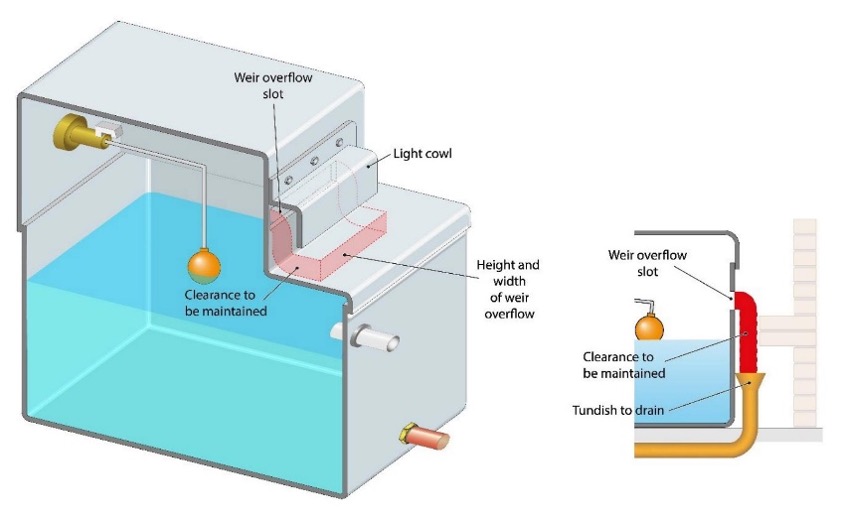
Image: A Type AB rectangular weir, ideally annotated to show the overflow slot, air gap and discharge route.
6. The standards and guidance to refer to
When designing, installing or assessing these arrangements, relevant references include:
- The Water Supply (Water Fittings) Regulations 1999: Schedule 2, including the requirements relating to storage cisterns and backflow prevention.
- BS EN 1717: Protection against pollution of potable water in water installations and general requirements of devices to prevent pollution by backflow.
- BS EN 806-5: Operation and maintenance of water supply installations inside buildings, including inspection and maintenance of protective devices.
- BS EN 13077:2023: Devices to prevent pollution by backflow of potable water – air gap with non-circular overflow (unrestricted), Family A, Type B.
- BS EN 14622 and BS EN 14623: Relevant standards for air gap arrangements with circular overflows.
- Water Regs UK guidance: Specific guidance on Type AB air gaps and cold-water storage cistern overflow and warning arrangements.
Always check the current editions and the requirements applicable to the location and type of installation. Requirements and accepted specifications can differ across the UK.
Getting the details right
Air gaps, overflows and weirs may be relatively small components of a cold-water storage installation, but their role is significant.
They help protect the wholesome water supply, prevent uncontrolled discharge, provide early warning of faults and support the safe operation of the system. For specifiers, installers, contractors and those responsible for building water systems, understanding the difference between these arrangements – and ensuring they are correctly designed, sized, installed and maintained – is essential.
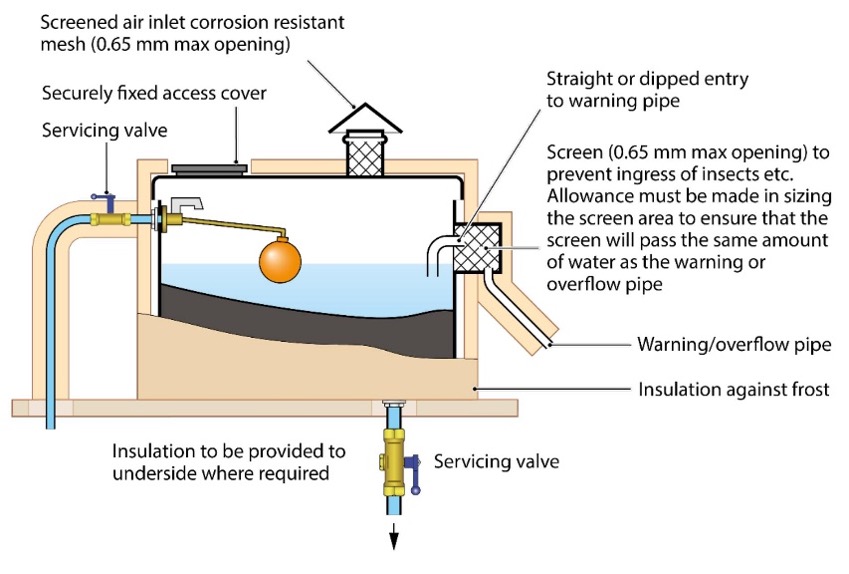
Image: An overflow and warning pipe arrangement, with a focus on screening, discharge and maintenance.
Good tank design is about more than storing water. It is about protecting the water, the building and the people who rely on it.
References:
Technical references and further guidance:
| Reference | Why it’s useful | Link |
| Water Supply (Water Fittings) Regulations 1999 | The regulatory basis for storage cistern requirements, including overflow arrangements, warning pipes, covers and contamination prevention. | The Water Supply (Water Fittings) Regulations 1999 |
| Water Regs UK – Type AB Air Gaps | Technical requirements for Type AB arrangements, including weirs, discharge and inspection. | Water Regs UK Limited – Type AB air gaps |
| Water Regs UK – Overflow and Warning Arrangements | Practical guidance on pipe sizing, screens, discharge and warning arrangements. | Water Regs UK Limited – Specific requirements for cold water storage overflow and warning arrangements |
| Water Regs UK – Type AB Weir Cowls and Shrouds | Guidance on preventing light penetration while ensuring that the weir discharge is not restricted. | Water Regs UK Limited – Specific requirements for cold water storage cisterns incorporating a Type AB air gap |
| ATCM – Cistern Inlet Calculations | ATCM technical guidance on air gap calculations, including arrangements involving multiple inlets. | https://www.atcmtanks.org.uk/tank-calculators/ |
| ATCM – Cistern & Tank Maintenance Guide | Supporting guidance for tank inspections, maintenance and good practice. | https://www.atcmtanks.org.uk/cistern-tank-maintenance-guide/ |
| BS EN 13077:2023 | The standard covering air gaps with non-circular overflows (unrestricted), Family A, Type B. | https://knowledge.bsigroup.com/ |
Additional ATCM technical guidance:
- ATCM Technical Guides
- Key Considerations for Installing Cold Water Storage Cisterns
- Important Notes – Sectional Tanks
The key technical points above are supported by the regulations and guidance, including the distinction between Type AB weir arrangements and ordinary overflow/warning pipes.
Technical note: This article is intended as general technical information and should be read alongside the applicable regulations, standards, water undertaker requirements and site-specific risk assessment. It does not replace the need for competent design or installation advice.